Jump directly to the page contents

from Astrid Mignon Kirchhof

Nuclear Power was one of the defining technologies of the 20th century reflected for example in expressions like the Nuclear Age. And for some societies this era seems to come to an end. But what happens after nuclear phase-out? What are the social, environmental, and political consequences for contemporary societies?

These questions are at the heart of a topic which is currently investigated at the research department of the Deutsches Museum in Munich. One of its core areas of investigation concerns the diverse and often unforeseen paths emerging from the interaction between science, technology, and society. Researchers at the institute examine how technological innovations have shaped past lives and communities, and how these technologies continue to influence contemporary societies. 

In cooperation with the Carl Friedrich von Siemens Stiftung the Research institute of the Deutsche Museum therefore invited other scholars from the humanities and social sciences to discuss the multifaceted legacies of the nuclear age at the international and interdisciplinary workshop “Post-Atomic Formations”. Against the winter backdrop of Nymphenburg Palace, the Carl Friedrich von Siemens Foundation provided a setting that encouraged careful thinking and open exchange—an ideal place to reflect on the long afterlives of nuclear power.

Researching the Question of the "Post-Atomic"

After the end of nuclear power, it still poses questions we cannot yet sufficiently answer: What happens when we decide – as Germany has done – on a nuclear phase-out? Of course, reactors are shut down, facilities dismantled, landscapes remediated – and yet the nuclear age reaches out into our present. As researchers, but also as citizens, we are increasingly confronted with a simple but unsettling question: What does it mean to live with nuclear technologies after their apparent end? 

Decomissioning of Nuclear Facilities: More Than a Technical Process

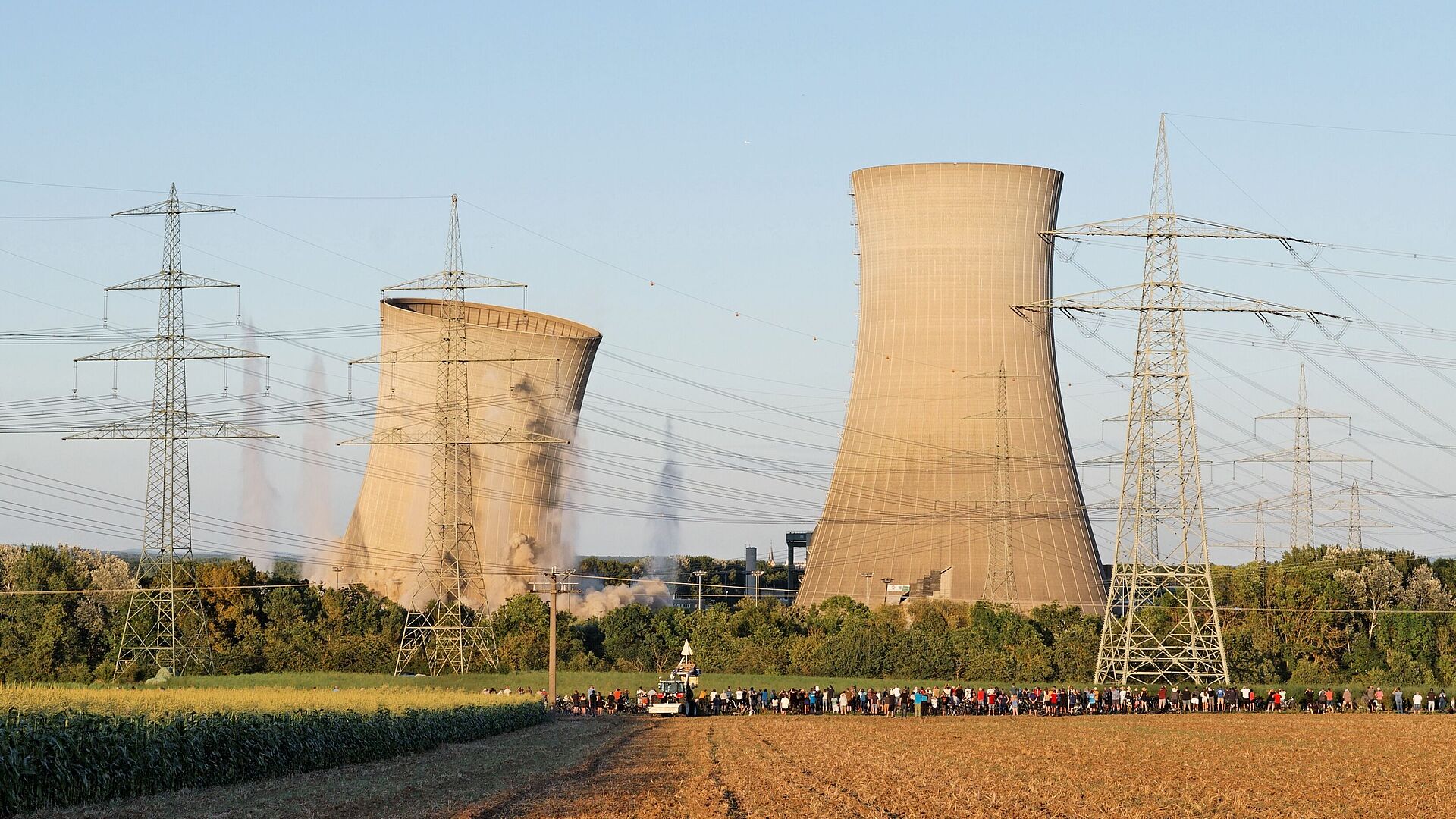
At the heart of the research on the end of the nuclear age lies decommissioning: the process of taking nuclear facilities out of operation and dismantling their infrastructures. While often described in technical terms, decommissioning is anything but merely technical.

From a historical and social-scientific perspective, it is a profoundly social, political, and cultural process. It reshapes communities that once depended on nuclear facilities, transforms landscapes marked by contamination or risk, and raises enduring questions about responsibility, safety, and time. Radioactive waste does not disappear; it demands care that extends far beyond a single generation. 

Why Study Decommissioning?

For researchers working in the humanities and in a museum context, decommissioning is not simply an endpoint. It marks the beginning of a new phase of the nuclear age. Studying how nuclear sites are dismantled, regulated, and remembered reveals how deeply nuclear technologies remain embedded in societies even after their official closure.

In our research we directly address questions of enormous social, economic and political relevance – both for us and for future generations:

  • What happens to places once nuclear infrastructures are removed?
  • How are expertise, authority, and public trust negotiated in the process of dismantling?
  • Who decides when a site is “safe” again?
  • How are nuclear legacies remembered , erased, or transformed into heritage?

Are We Really "Post-Atomic"?

One of the central questions raised during our intense two-day workshop was whether the term “post-atomic” is adequate at all. Some countries are dismantling nuclear facilities, but others are extending or reinventing nuclear technologies. At the same time, nuclear waste repositories, former mining regions, and long-standing scientific institutions continue to shape political debates and environmental realities. Even if a nuclear reactor is no longer part of the landscape, its former presence has shaped the infrastructural, social, political and scientific conditions of the (local) communities.

Rather than a clear “after,” we are dealing with post-atomic formations—conditions in which dismantling, long-term risk, memory cultures, and new technological promises coexist. Decommissioning makes these tensions particularly visible.

Exchange, Research, and Conversation

The “Post-Atomic-Formation” workshop extended beyond formal sessions, continuing over shared meals—including an evening at the Königlicher Hirschgarten. What in the end mattered most was the shared realization that ending nuclear power is not a single act, but an ongoing societal process.

Why Nuclear Legacies Concern Us All

Museums like the Deutsches Museum play a crucial role in making nuclear legacies visible. They preserve objects and stories of technological innovation, while also providing space to reflect on long-term consequences, uncertainty, and responsibility.

Looking at decommissioning helps us understand technology not only in terms of progress, but as something that binds past, present, and future together. The question of what remains of nuclear power is therefore not only scientific — it concerns us all.

Author

Astrid Mignon Kirchhof

Astrid Mignon Kirchhof is historian of German-German history, environmental history, and the history of technology. Currently she is a Scholar in Residence at the Deutsches Museum.

Her tip for a visit to the Deutsches Museum: Explore the museum’s historical collections—many objects reveal unexpected stories about everyday life and technological change.